Editorial highlights eyebrow
Editorial highlights heading
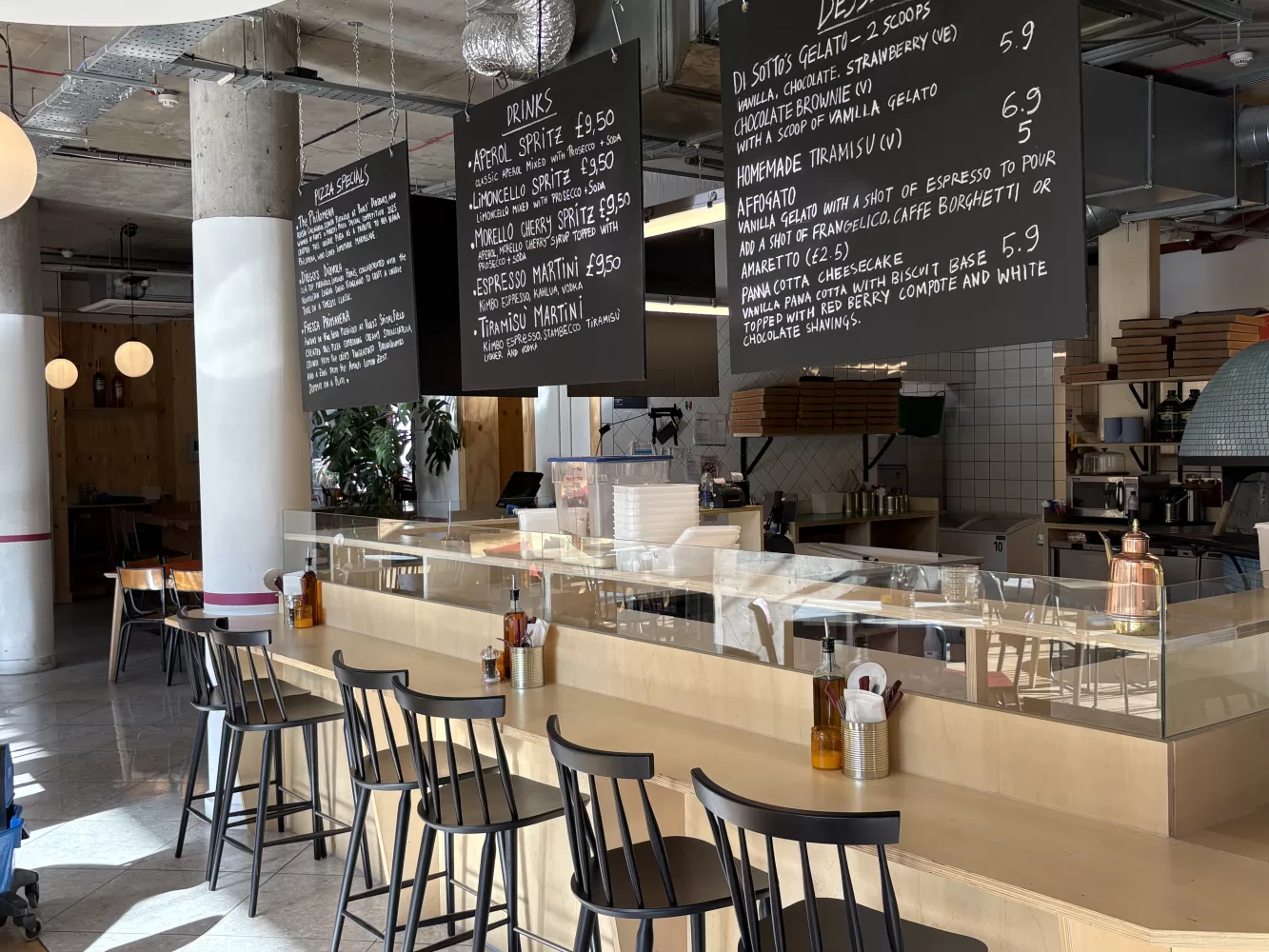
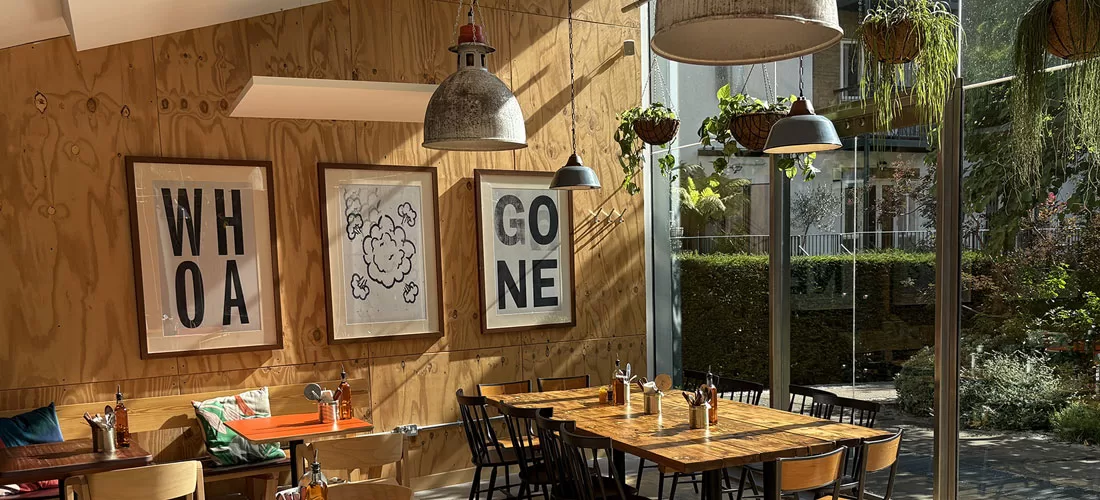
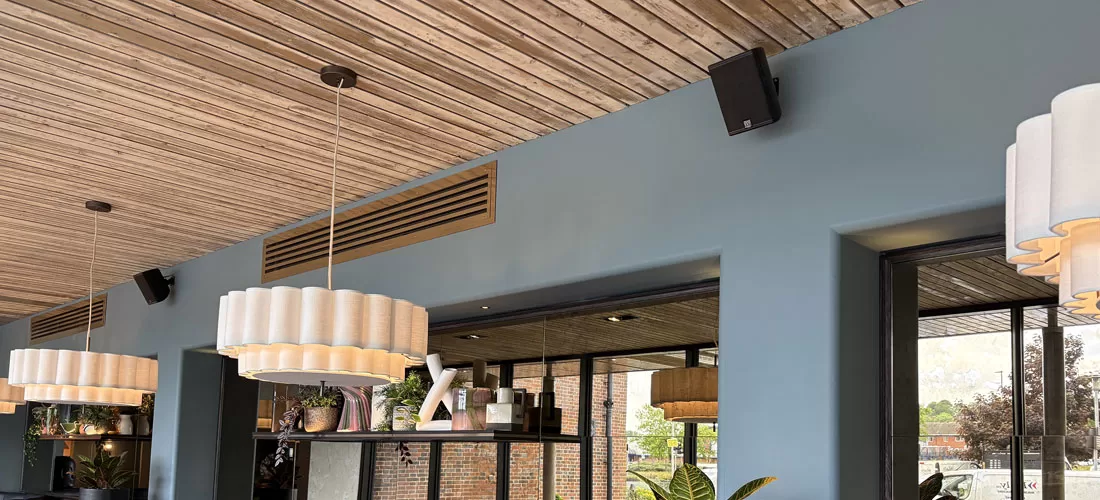
Card: Even background sound with low visual impact
Speaker selection and placement for consistent ambient levels while minimising visible fittings; preserves diners’ sightlines and restaurant aesthetic.
Card: Zone control for service and private dining
Independent volume, source and schedule control for bar, dining room, terrace and private rooms to match service patterns and noise constraints.
Card: Staff-friendly scenes and display management
Named scenes lock technical settings while letting staff select dining, service or event modes from a simple touchscreen or app.
Technical detail: Multi-zone audio architecture and constraints
We specify multi-zone audio architectures that prioritise even coverage, intelligibility and predictable SPLs. Typical deployments separate zones by function—bar, main dining, terrace, private dining, kitchen/servery—and map them to independent amplifier channels or DSP-defined zones. Equipment decisions include low-profile ceiling or pendant speakers for dining rooms, weather-protected enclosures for terraces, and directional speakers for narrow circulation routes. We size amplifiers to provide conservative headroom (minimum 6 dB) at expected peak levels while maintaining thermal and ventilation considerations in plant locations. Interface and constraints: we verify mains capacity at rack locations, confirm head-end rack space or supply dedicated enclosures, and specify networked audio where AES67/Dante is used for source distribution. Where neighbour sensitivity exists, we plan for controlled limiter thresholds and integrate long-term level logging for compliance or dispute resolution. Deliverables include a zone schedule, speaker placement drawings, amplifier load calculations, and an SPL target table for each zone with measurement points for commissioning.
Technical detail: Control systems, user permissions and scenes
We implement control systems that expose only required functions to front-of-house staff: named presets (e.g. Breakfast, Lunch, Evening, Event), per-zone volume faders, mute/unmute and source selection. Administrative settings—equalisation, compressor thresholds and routing—are password protected for technical staff. Control interfaces are typically a central touchscreen in the manager area plus mirrored web/app access for authorised users. Integration tasks include mapping control API endpoints between DSP/amplifier manufacturers and the control engine, testing fallback behaviour if the control processor restarts, and defining timeout and watchdog settings to prevent runaway audio levels. Deliverables: control screens mock-ups, permission matrix, API mapping document, and an on-site training session with written quick-reference guides.
Technical detail: Lighting scenes, display scheduling and integration
Lighting contributes to dining atmosphere and operational clarity. We design DMX or networked lighting zones that follow the same scene logic as audio, enabling synchronous changes (for example 'Evening' scene lowers house lights, fades background music and switches displays to entertainment content). For displays we specify commercial-grade panels or video walls with ambient light-tolerant brightness and mounting that preserves sightlines. Scheduling integrates with the venue’s trading hours and POS triggers where required so displays and playlists reflect service state. Engineering notes: power distribution for LED lighting and displays must consider inrush currents and PSU derating for continuous duty. We provide a lighting power schedule, circuit protection layout and thermal management plan for enclosed display housings.
Technical detail: Digital sources, distribution and display routing
We select source routing appropriate to the operator workflow: centralised media server with multi-zone audio outputs for playlists and announcements, live feeds for sport, and HDMI-over-IP or AVoIP for multi-screen distribution. For restaurants requiring multiple independent screens we design a matrix that supports independent and synchronous playback with minimum latency. Where necessary we provide codec and handshake checks for third‑party broadcast sources and ensure EDID and HDCP compatibility with installed displays. Constraints and checks: network VLAN separation for AVoIP streams, QoS rules to prioritise audio/video traffic, and redundancy options for critical media sources. Commissioning includes proofed signal paths from each source to every zone and measured latency figures for sync-critical scenarios.
Technical detail: Acoustics, commissioning checks and noise risk mitigation
We assess acoustic characteristics—reverberation time, reflective surfaces and neighbour-bearing walls—then model speaker coverage to avoid hotspots and intelligibility issues. Commissioning tasks include measuring SPL at multiple seating positions, making third-octave analyses for resonance problems, setting crossover points and applying corrective FIR/IIR filters in the DSP. Risk mitigations: install boundary microphones for paging where required, implement adaptive limiters to prevent excursions, and document recommended operating level ranges for staff. Commissioning deliverables include measurement reports, filter presets saved to the DSP, and an operations sheet outlining acceptable SPL ranges and escalation steps if levels exceed agreed thresholds.
Technical detail: Maintenance, remote support and lifecycle considerations
We hand over a technical dossier containing equipment lists, serial numbers, network addressing, firmware baselines and configuration backups. For ongoing support we propose a tiered approach: remote monitoring and firmware management, scheduled preventive visits for mechanical checks and on-site fault response windows. Remote access is implemented via secure VPN or manufacturer service channels with two-factor authentication and an agreed change-control procedure. Lifecycle decisions: we advise on spare-part stocking (commonly consumables: PSU modules, fan assemblies, connectors) and firmware upgrade windows scheduled outside trading hours. Service deliverables include a maintenance schedule, contact plan for rapid response and documented rollback procedures for software updates.